
It has been argued that Sufism is more receptive to cultural diversity, interfaith engagement and religious pluralism than exoteric or legalistic forms of Islam. The mutual interaction between Sufism and local cultures is reflected in poetry, music, hagiographies, memoirs and ritual practices, while Sufi shrines frequently function as shared sacred spaces for people of different faiths. Moreover, core Sufi concepts such as fanāʾ (annihilation of the self), longing for the Beloved and contemplation often resonate with spiritual ideals found in other religious traditions. In particular, early Sufism in many ways resembles Eastern Christian asceticism. It is also apparent that the Sufi notion of “union with God” bears similarities to Neoplatonic contemplative practices, as well as to forms of meditation practised by Hindu and Buddhist monks. As a way of life, Sufism has also been debated within Islamic culture. One of the oldest stereotypes in Islam is the enduring conflict between the legalist and the mystic, as observed by Vincent J. Cornell (“Faqih versus Faqir in Marinid Morocco: Epistemological Dimensions of a Polemic.” In Islamic Mysticism Contested: Thirteen Centuries of Controversies and Polemics, edited by Frederick De Jong & Bernd Radtke, 207-224. Leiden: Brill, 1999, p. 207). This is partly because the core Sufi concept of ma‘rifa (gnosis or mystical knowledge) does not appear in the Qur’an or in any prominent prophetic report or Hadith (Ahmet T. Karamustafa, “Preface” to Knowledge of God in Classical Sufism: Foundations of Islamic Mystical Theology, translated and edited by John Renard. New York: Paulist Press, 2004, p. xi).
The similarities between Sufism and earlier mystical traditions have sparked debates about its origins and authenticity. Some scholars have argued that Sufism was heavily influenced by Christian asceticism, the Vedāntic concept of mokṣa and the Buddhist notion of nirvāṇa, thereby questioning its originality as an Islamic practice.
Margaret Smith argues (Studies in Early Mysticism in the Near and Middle East. London: The Sheldon Press, 1931, pp. 170-253) that many core elements of Sufism, including repentance (tawba), asceticism, trust in God (tawakkul), poverty (faqr), renunciation (zuhd) and the idea of union with God, have strong parallels in Christian mystical and ascetic traditions. She identifies similarities between the experiences and teachings of prominent Sufis such as Ibrāhīm Adham, Ḥasan al-Baṣrī, Rābiʿa al-ʿAdawiyya and Abū Yazīd al-Bisṭāmī and those of Christian saints, monks and mystics. Smith further suggests that Christian influence entered Islamic mysticism through social interactions, intermarriage, translations and the participation of Christians in early Islamic society.
Image
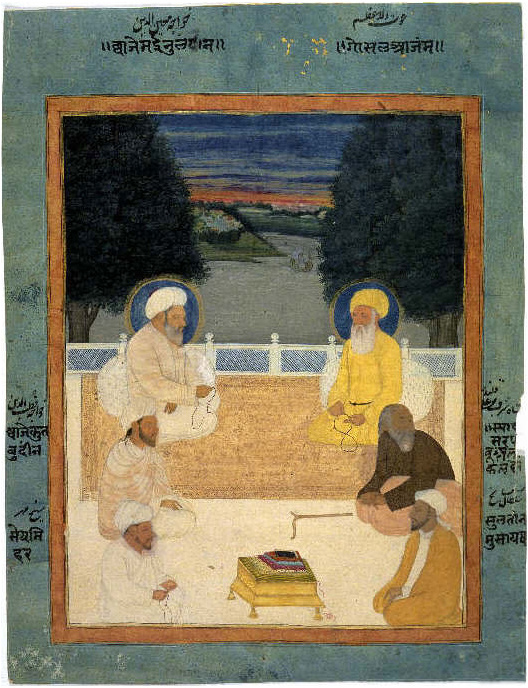
It is interesting to note that, while searching for the Christian origins of Islamic mysticism, Smith did not pay much attention to the Qur’an. For example, the Qur’an mentions tawba on several occasions, including in verses 2:160, 6:54, 9:118 and 42:25, in addition to containing a full chapter on repentance. Trust in God, or tawakkul, is a fundamental element of the Islamic faith (Qur’an 65:3). Meditation is related to remembrance, or dhikr, in the Qur’an (24:37). The Qur’an also calls for fear and longing (7:56, 20:131), while shukr, or gratitude, is described in verse 14:7. Satisfaction, or rida, is expressed in the Qur’an in terms of an emotional relationship between human beings and a loving God.
Despite the Qur’anic verses that express a mystical dimension, proximity to Christian ascetics surely inspired early Muslim mystics. Nevertheless, the Qur’an does not deny the importance of Judaism and Christianity to Islam; rather, it presents Islam as an attempt to restore the Abrahamic faith in its original form (2:85, 91; 3:2, 85). “For the Qur’an itself states clearly that the revelation vouchsafed to Muhammad was a confirmation of what had been revealed to previous Prophets,” noted Arthur J. Arberry (An Introduction to the History of Sufism: The Sir Abdullah Suhrawardy Lectures for 1942. London: Longmans, Green and Co., 1945, p. 55). The Qur’an also states: “And unto thee have We revealed the Scripture with the truth, confirming whatever Scripture was before it, and a watcher over it… For each We have appointed a divine law and a traced-out way. Had Allah willed, He could have made you one community… So vie one with another in good works” (5:48), and “Surely the believers and the Jews, and Christians, and Sabaeans, whoever believes in God and the Last Day, and whosoever does right, shall have his reward with his Lord and will neither have fear nor regret” (2:62).
Thus, following a Christian ascetic is not necessarily considered an un-Islamic practice by many pious Muslims. Hasan al-Basri did not hesitate to cite Moses, David and Jesus, along with the Prophet of Islam, as role models for poverty and abstinence when he encountered Caliph Omar b. ‘Abd al-‘Aziz (see Suleiman A. Mourad, Early Islam between Myth and History: Al-Hasan al-Basri (d. 110 H/728 CE) and the Formation of His Legacy in Classical Islamic Scholarship. Leiden: Brill, 2005, p. 129). It is not unlikely that Muslim ascetics and early Sufis were primarily inspired by their own holy scripture, namely the Qur’an, and by the Prophetic traditions.